
Cost segregation is
an IRS-approved way
to reduce your taxes
Depreciation
The IRS allows taxpayers to deduct depreciation for the wear and tear of a property.
Most people just default to the straight-line method (27.5 years for residential properties or 39 years for commercial properties, which includes short-term rentals).
Cost Segregation is IRS approved
The IRS says that different property components have different useful lives. For example, appliances and carpets typically require more frequent replacement and so have 5-year useful lives.
A cost seg study identifies and reclassifies property components into shorter useful life buckets for tax purposes.
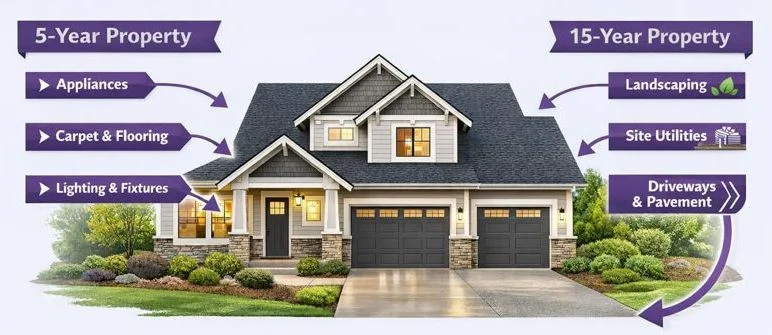
The result is accelerated depreciation to the property owner - higher depreciation deductions. This results in significant tax savings and increased cash flow.
Cost seg studies do not increase your audit risk when done properly. Cost seg is an IRS-approved strategy, and we've never had a study rejected by the IRS in our 20 years of experience.
Bonus Depreciation
Bonus depreciation significantly accelerates the depreciation that can be deducted in year 1, materially increasing the tax savings from cost seg.
Depending on when you bought your property, you may be able to claim up to 100% bonus depreciation.
Use Your Tax Savings To
Buy the next property
Pay down debt faster
Increase cash reserves
Cost Seg Example
Purchase price for a short term rental | $1,000,000 |
% allocated to land (not depreciable) | 20% |
| Depreciable basis | $800,000 |
Reclass % | ~ 25% |
Bonus depreciation eligible assets | ~ $200,000 |
| Year 1 tax savings at a 37% tax rate | ~ $74,000 |
Higher depreciation → lower taxable income → improved cash flow
See How Much You Could Save
Trusted by Property Investors Nationwide
We Stand Behind Our Work
Lifetime Audit Protection
We stand behind our work with comprehensive audit protection
No Studies Rejected
The IRS has accepted 100% of our studies because of our engineering-based methodology and high quality reports